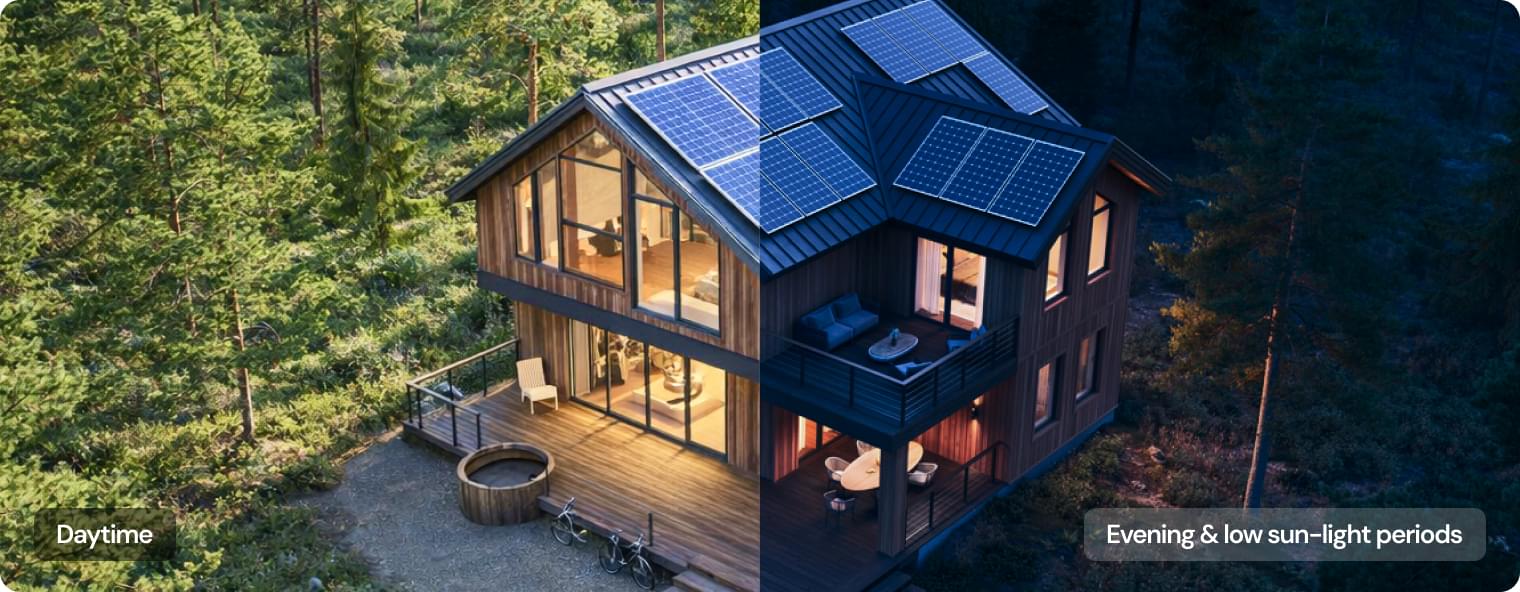
A solar battery stores the extra electricity generated by your solar panels during the day so you can use it later — rather than exporting that energy to the grid or letting it go to waste. This means more of your solar power is used in your home, helping reduce your reliance on grid electricity and lowering your energy bills.
During daylight hours, your solar panels produce electricity from sunlight. Your inverter converts this power into a form your home can use. If your solar panels make more electricity than your household needs at that moment, the surplus is sent to your solar battery instead of being wasted or exported.
When the sun goes down or production drops, your home draws electricity from your solar battery first. Only once your stored power is depleted will your system begin to import energy from the grid. This helps reduce the amount of electricity you buy at peak rates, saving you money over time.
Without a battery, surplus solar energy is typically sent to the grid at a low feed-in rate — often much less than what you pay when buying electricity back from the grid later. A solar battery helps you keep and use that energy yourself, making your solar system more cost-effective and efficient.
Solar panels generate electricity during the day. If your home doesn’t use all of that energy, the excess is stored in the solar battery instead of being sent to the grid. You can then use that stored energy later — such as in the evening or on cloudy days — reducing the amount of electricity you need to buy from the grid.